Writing is often treated as a solitary craft. You sit alone with your words, your characters, and the pressure to make something meaningful rise out of the dark cavern in your head. But one of the most powerful tools for improving your storytelling might not be a writing exercise at all.
It might be a tabletop role-playing game.
Dungeons & Dragons (often referred to by players as D&D, or even DnD) is generally described as a game of dice, rules, and fantasy combat, but at its core, it’s a collaborative storytelling experience. For writers and authors, that makes it a surprisingly effective training ground for narrative skills that are difficult to practice alone.
I know it has been for me.
So, whether you’re a novelist, short story writer, screenwriter, aspiring author, or even a poet, playing D&D can make you a better writer, not by replacing traditional writing practice, but by strengthening the storytelling muscles that fiction depends on.
In this blog, I’ll break down how and why D&D improves writing craft, from character creation and dialogue to pacing, worldbuilding, and narrative flexibility.
What is D&D, really? A storytelling tool disguised as a game
Before we talk about writing benefits, it’s important to clarify what D&D actually is.
At its heart, D&D is:
- collaborative storytelling
- improvised character-driven narrative
- structured imagination with consequences
In the game, the world’s parameters and conflict are set by the Dungeon Master. The Dungeon Master leads the players through the narrative, but encourages them to make decisions for themselves. Outcomes are generally decided according to what the players want to do, and the role of a die. Players embody characters within that world. Together, the table creates a story, one that no single person fully controls.
For writers, this mirrors one of the hardest truths of storytelling.
Stories don’t come alive through planning alone. They come alive through interaction. This is why planning out a novel to the finest detail doesn’t always work. Characters who live and breathe, make their own decisions, do unexpected things. So authors must remain agile to keep up with the changing action.
D&D forces you to engage with story as a living system, not a static outline. That’s where its value begins.

(The infamous twenty-sided die)
How playing D&D improves character creation
You learn to write characters who act, not just exist
In fiction, it’s easy to create characters who look good on the page but fall apart in motion. D&D doesn’t allow that.
When you play a D&D character, you must:
- make decisions in real time
- react to pressure
- face consequences
- change based on experience
This trains writers to think in terms of character agency, not just backstory.
A character in D&D isn’t interesting because of their tragic past. They’re interesting because of what they do when things go wrong, fuelled by their tragic pasts.
Writing lesson:
If a character wouldn’t survive a D&D session, they probably aren’t active enough for a novel either.
Flaws matter more than strengths
In Dungeons and Dragons, flaws are not decorative. They’re disruptive. They cause problems. They derail plans. They force difficult choices. They may even lead to the death of one of your party. Or you.
This is exactly what good fiction requires.
Playing D&D teaches writers that perfect characters are boring. They’re no suspense or conflict. We don’t worry about whether they’ll ‘make it’. Conflict emerges from limitation, and personality matters more than power. Every time. They don’t have to be a comedy genius, or throwing out quips every few minutes, but they do have to be real.
Over time, you start creating characters with:
- clear values
- meaningful weaknesses
- emotional pressure points
These are the same traits that make fictional characters compelling on the page.
D&D teaches you how to write dialogue that feels real
Dialogue is one of the hardest skills for writers to master, and yet it’s one of the easiest to practice in D&D.
You learn what dialogue can and can’t do
At a D&D table, dialogue flows between players. Players, in a sense, act throughout the game. How you do this depends on what you want. Some players will just relate what their character says in third person, and others will go into full-blown character mode (fantasy hats are entirely optional). But in either case, the characters talk and reveal themselves naturally. Sometimes, it might be conversational or ‘banter-esque’, but during investigations or conflict, it needs to communicate intent quickly and move the scene forward.
There’s no room for indulgent monologues or overly polished speeches. If you ramble, people stop listening.
This gives writers a practical understanding of:
- subtext
- conversational rhythm
- voice differentiation
You begin to feel when dialogue works, rather than just analysing it.
Improvisation builds an authentic voice
D&D dialogue is improvised. You don’t get to revise it before someone reacts. It’s just like real life.
That pressure (hopefully) strips away self-consciousness and encourages instinctive choices.
Many writers and authors struggle because they overthink dialogue. I definitely do. When I edit a draft, I often cringe at how superfluous half of it is, or how saturated with meaning and unnatural it sounds. D&D trains you to trust character voice instead of polishing it to death.
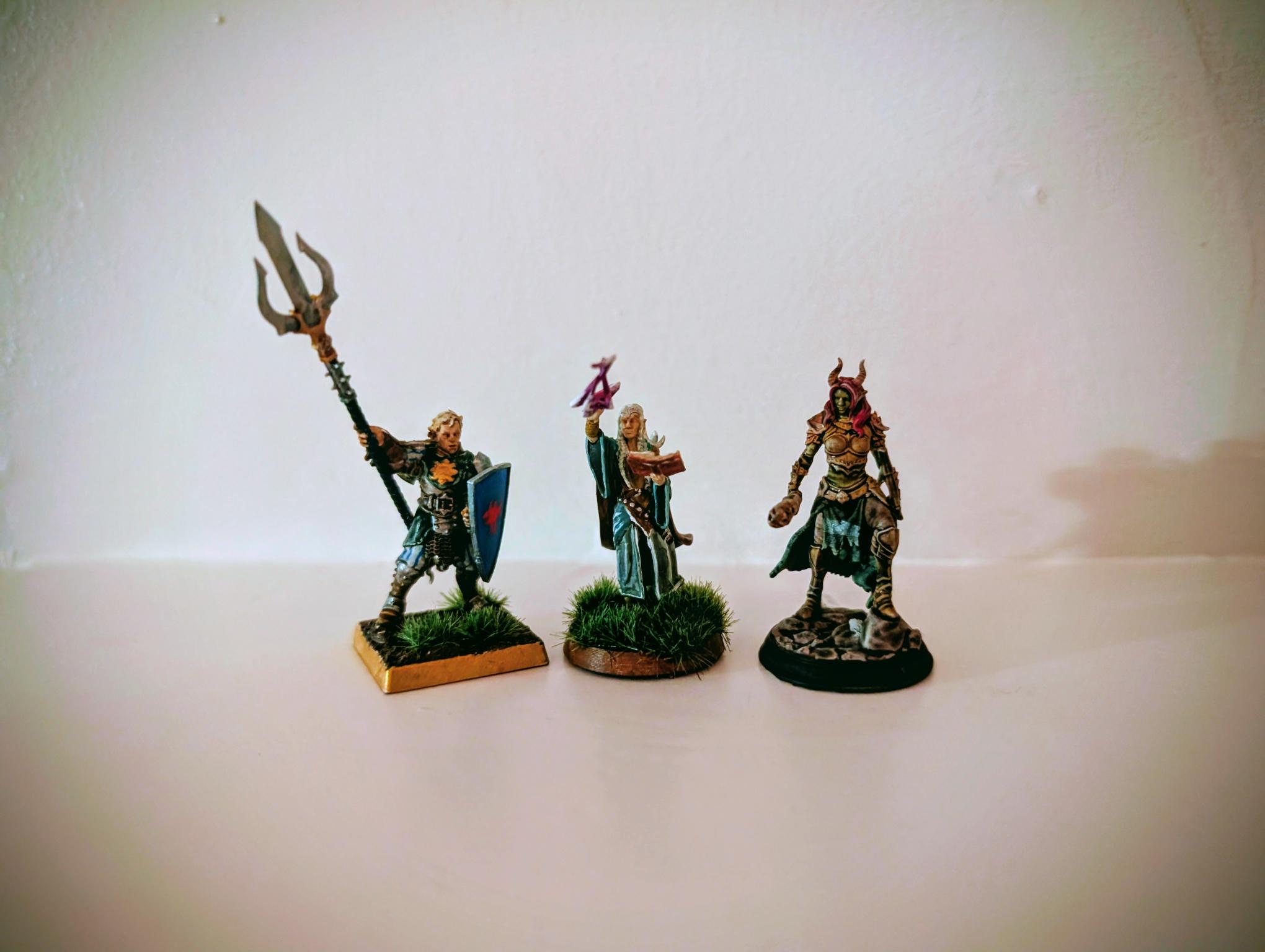
(One of our campaign parties)
Story structure: what D&D teaches writers about plot
You learn that plot is reaction, not control
In D&D, no plan survives contact with the players. For writers, this is an essential lesson.
D&D reinforces that:
- plot emerges from character decisions
- dtory momentum comes from consequences
- flexibility is more important than perfection
If your novel outline collapses when a character makes an unexpected choice, D&D helps you understand why, and how to fix it.
Pacing becomes instinctive
At the table, pacing is obvious. If there’s too much exposition, players disengage. Start forgetting all the details. And if there’s too much action, there’s not enough time for character development. Without character development, why would we care what happens to the party?
We need the right balance of action and emotional weight to carry both characters and action along.
Dungeon Masters constantly adjust rhythm, tension, and release. Writers who play D&D develop an intuitive sense of:
- when to escalate stakes
- when to slow down
- when to let characters breathe
This translates directly to stronger narrative pacing in fiction.
Worldbuilding in D&D vs fiction writing
You learn to build only what the story needs
Many writers overbuild their worlds and underuse them. I wrote a guide to worldbuilding which goes into what makes historical, science fiction, and fantasy worlds come alive. But even I go a bit overboard, sometimes.
Dungeons and Dragons teaches us restraint.
In a campaign, worldbuilding exists to support play. Any superfluous details won’t matter, and won’t be remembered. Details matter only if they affect choices, or add meaning.
This is also an opportunity to talk about the importance of showing, not telling in writing. We can’t just reel off the laws of the world and info-dump, while expecting readers or players to care. Lore has to be revealed through interaction, whether its dialogue, action, or consequence.
Living worlds create better stories
D&D worlds change based on player actions. Kingdoms fall. NPCs remember. Consequences ripple.
For writers, this reinforces that:
- worlds should respond to characters
- setting is an active force, not a backdrop
- history matters because it shapes present choices
Collaborative storytelling makes you a stronger writer
Writing is solitary. Though it might appear like a lot of networking and group chats, the main bulk of it involves sitting on your own at a computer. It’s the hard truth. And spending all that time alone can create tunnel vision. Dungeons and Dragons breaks that.
At the table, you constantly:
- build on other people’s ideas
- react to unexpected turns
- learn what engages real humans
It’s like the ultimate writing group and set of test subjects that you could get. 😊 Listening and interacting with the party sharpens a writer’s instincts about:
- audience engagement
- emotional payoff
- narrative clarity
You see what works immediately, and what lands with a wet and soggy splat. The results might not be what you expect.
Why D&D helps writers overcome perfectionism
One of the biggest barriers writers face is fear. It’s the main reason authors falter, and it’s the main reason many aspiring writers don’t even start. It’s the reason that editing can go on forever (I tend to stop when I literally can’t face the manuscript anymore without feeling ill).
This paralysis might be:
- fear of getting it wrong
- fear of bad first drafts
- fear of wasted effort
D&D doesn’t allow perfectionism. The story moves whether you’re ready or not. It’s just like real life, in that sense.
This constant movement teaches writers to:
- embrace messy drafts
- value momentum over polish
- trust revision instead of freezing
Many writers credit roleplaying games with helping them finish projects, not just start them.
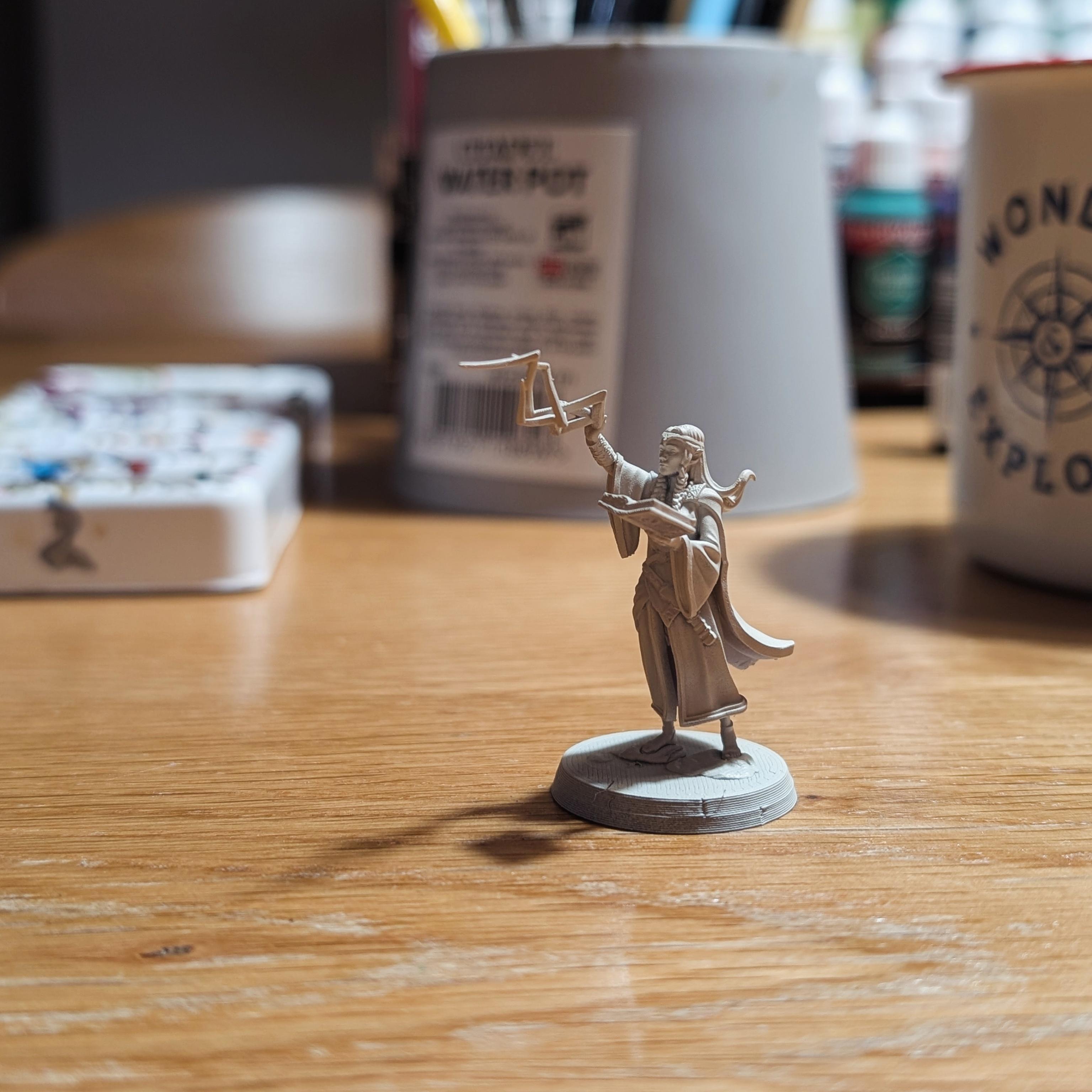
(My sorcerer, pre-painted. I haven’t made a mini for my other characters, yet. But I will this year!)
Is D&D useful for all types of writers?
Is D&D useful for all types of writers?
Yes, it truly is! There are different benefits for different types of authors, but there’s definitely a hefty amount of crossover, too.
- Novelists can explore character arcs, pacing, and world interaction
- short story writers can learn about economy, focus, and consequence
- Screenwriters can hone their dialogue, scene flow, and collaboration
- Fantasy & sci-fi writers can go to town on their worldbuilding discipline
- Literary writers can develop deeper character psychology and moral choice
You don’t need to write fantasy to benefit from fantasy roleplaying.
Storytelling principles transfer across genres.
How writers can use D&D intentionally to improve their craft
If you want to use D&D deliberately as a writing tool, there are ways to make the most of what you’re doing. Some ideas could be:
- play character-driven campaigns
- choose characters with strong values and flaws
- pay attention to emotional beats, not just plot
- reflect after sessions: what changed, and why?
Treat each session as a storytelling lab, and your players as test subjects. You don’t need to be a Dungeon Master, either. This can be done as a player, too.
Final thoughts: D&D is storytelling practice, not a distraction
Playing Dungeons and Dragons isn’t a replacement for writing, but it is one of the most effective ways to practice storytelling in motion.
It teaches writers to:
- create active characters
- write believable dialogue
- understand pacing intuitively
- build worlds that matter
- let stories breathe and change
For writers serious about craft, D&D isn’t a distraction from writing. It’s training.
Interested in learning more about how to be a writer? I write a LOT about that. Explore my blogs to find out more 🙂
 Caroline Hardaker Author