
Writer’s block feels like standing at the edge of a forest you used to know by heart, only now the paths have shifted. The trees look unfamiliar. The shadows lean in. Everything has gone dark. You’re alone, suddenly fearful.
And the words, which had been right on the tip of your tongue, have vanished.
It can feel like you’ll never escape these deep, dark woods. I know, I’ve been there an awful lot. Even now, it still feels like this might be it; the end of the road, the end of my career. But it never is. Because the sun comes up eventually, and the path is there right in front of you, under the tangling weeks. You just couldn’t see it.
Writer’s block isn’t the end. It’s a fork in the road. A pause. A quiet invitation to look inward, outward, or simply differently. And the good news? There are many ways through the trees.
Below are practical, gentle, and genuinely effective ways to overcome writer’s block, all of them helping without force, guilt, or wrestling with your imagination.
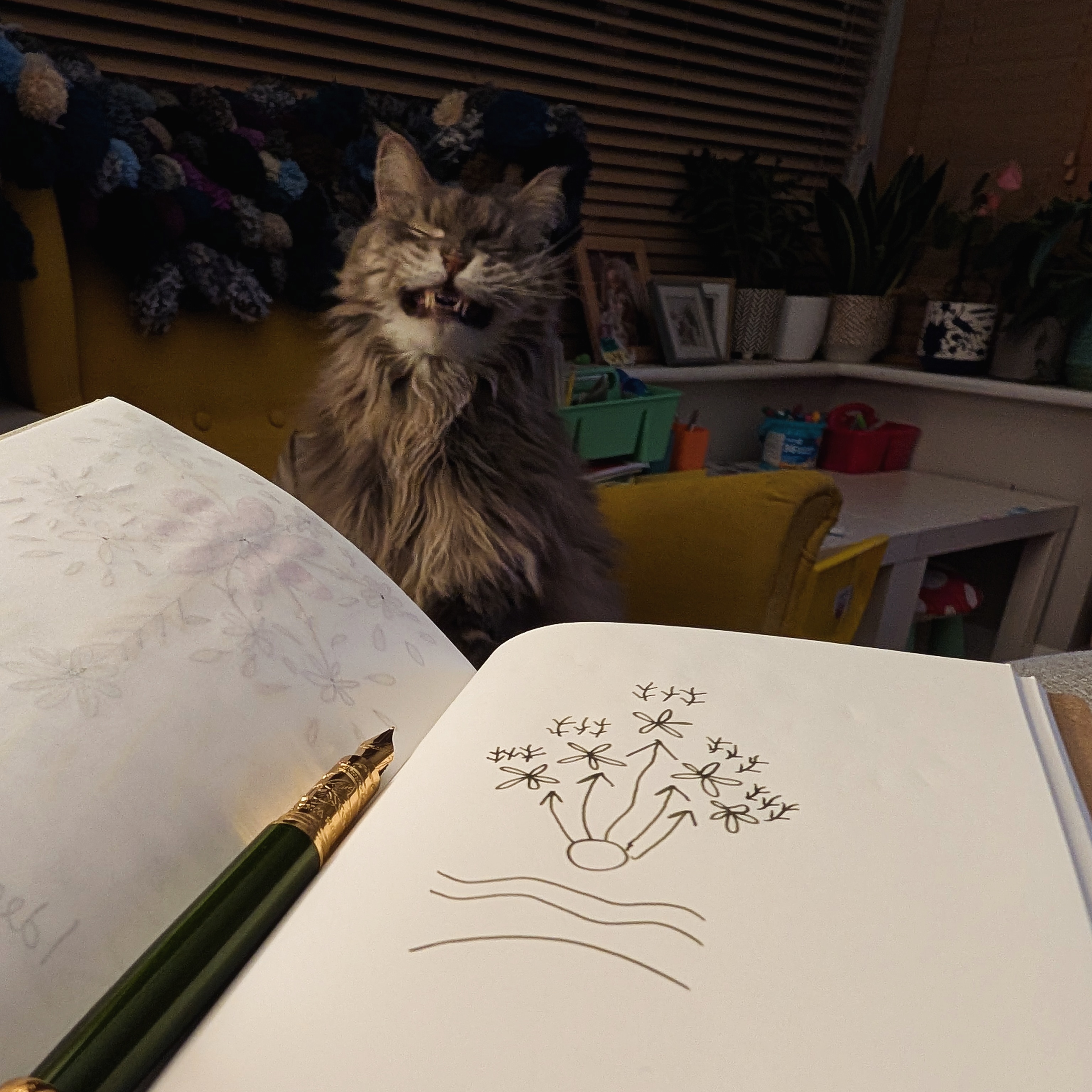
Understanding Writer’s Block (and why it isn’t failure)
Writer’s block doesn’t mean you’re a bad writer. It means you’re human, writing alongside a very real life with very real things happening in it.
Sometimes the block arrives because:
- your brain is tired
- you’re multitasking all the time
- your story is confused
- perfectionism has crept in unnoticed
- real life has taken the driver’s seat
- fear has wrapped itself around your creativity
When I was drafting my second novel, Mothtown, I hit a wall so solid I genuinely wondered if the story had ever been mine to tell. I’d written myself into a corner, at least three times. The problem wasn’t the plot. The problem was that I was exhausted, forcing myself to write long past the point of clarity. I was rushing things, pushing the story harder than I needed to, and pushing myself to a point where I could barely imagine at all.
Understanding why you’re stuck is often the first key to becoming unstuck.
Return to why you started writing
When the writing stalls, reconnecting with your original intention can be the key. Ask yourself:
- what was the spark that made me start this piece?
- what question was I trying to answer?
- what emotion did I want readers to feel?
I keep a tiny notebook packed with the very first lines and ideas that sparked each book. Whenever I feel adrift, I flip back to those wild, enthusiastic fragments. There’s usually just enough fire in them to remind me why I cared so fiercely in the first place.
I also look back to what I’ve already achieved, and think, ‘I’ve done it before, from absolutely nothing. So, I can do it again.’
Change your creative environment
When you stare at the same wall, your imagination slowly begins to mimic it.
Try shifting something. Anything. It can be large or small.
Try writing in a different room. A different café. A different time of day. Even a different tool, like switching from keyboard to notebook.
Some of my most productive writing days have happened spontaneously. I’d sit down after a long day at work and putting children to bed, but set up at the dining table instead. Or the blue sofa rather than the grey one.
Novelty stimulates creativity. Your writing brain is a curious creature, so give it something new to follow.
Lower the stakes: write rubbish on purpose
This is the one I struggle most with. When you work, look after children, and have a life already filled to the brim – it’s hard to allow yourself to waste time writing things that don’t matter. Perfectionism whispers that every sentence must shine.
But creativity needs room to wander, trip, and scrawl nonsense. And so even an hour spent just exploring some sort of tangent topic isn’t a waste at all. It’s freedom.
Read something completely different
Reading outside your usual genre can be revelatory.
If you usually write fantasy, try a gothic novella. If you’re a poet, try a science article. If you write romance, dip into eco-fiction or essays. I always find reading poetry to be a palette cleanser, not matter what I’m writing. Something about the stark imagery and tight grip on the words gives me a real shake-up.
New rhythms, new ideas, new styles, they all feed the creative compost heap.
Refill the creative well
Writer’s block often arrives when your creative tank is empty.
So fill it.
Take a long walk without a podcast.
Visit a gallery and stare at a painting longer than feels appropriate.
Set yourself up with a film and some popcorn. Films actually inspire me more than novels do. I have quite a visual imagination, but it’s the music, too.
Try a different form of creation
If your words feel frozen, try another outlet.
Draw something (badly). Bake. Garden. Recast your paragraph as a poem, or your poem as flash fiction. Bend it, stir it, experiment.
Creativity is a muscle group, not a single muscle. Strengthening one part often frees the others.
Set micro-goals (and celebrate them)
I am both great and terrible at this. I set myself so many microgoals that I overwhelm myself, and then I hold others to them too, which isn’t always fair. And then when I do achieve them, I rarely celebrate at all. I just move on to the next task.
It’s sort of cruel, really. But I aim to get better at this next year.
Writer’s block is when I loosen a bit, cut myself a bit of slack. So instead of aiming for 1,000 perfect words, I might try for:
- one messy paragraph
- rewriting a single sentence
- planning the next scene
Small movement is still movement.
Reward yourself for progress, not perfection. Writing is hard. We all deserve kindness along the way.
Stopping doesn’t mean you’ve failed
Writer’s block is part of the creative cycle, not an interruption of it. Rest and reflection are as important as drafting and editing.
Be patient with yourself. The forest will become familiar again. The words will return.
And when they do, they will be stronger for having stepped away and wandered a while.
Want to keep exploring the craft? Take a look at my guide to how to show, not tell, packed with simple techniques to bring your writing to life.
 Caroline Hardaker Author