When we think of novels, we imagine shining covers on bookshop shelves. Libraries, stacked full of stories. Or the much-loved tomes on your bedside table. But how did what started as a single park in an author’s head turn into a physical thing that’s shared, discussed, loved?
In this series, I’m peeling back the layers to explore how books begin. Each post invites a writer to reflect on their first draft — the awkward start, the stubborn scenes, the unexpected characters who muscled their way in, and the many cups of tea (or wine?) that got them through.
In the second of my ‘Dissecting my first draft’ series of guest blogs, Gabriela Houston – author of Slavic fantasy for adults and young people – writes about how she approached writing her first historical romance, Binding the Cuckoo, and the importance of ensuring that the key romantic relationship is both healthy and founded on respect.
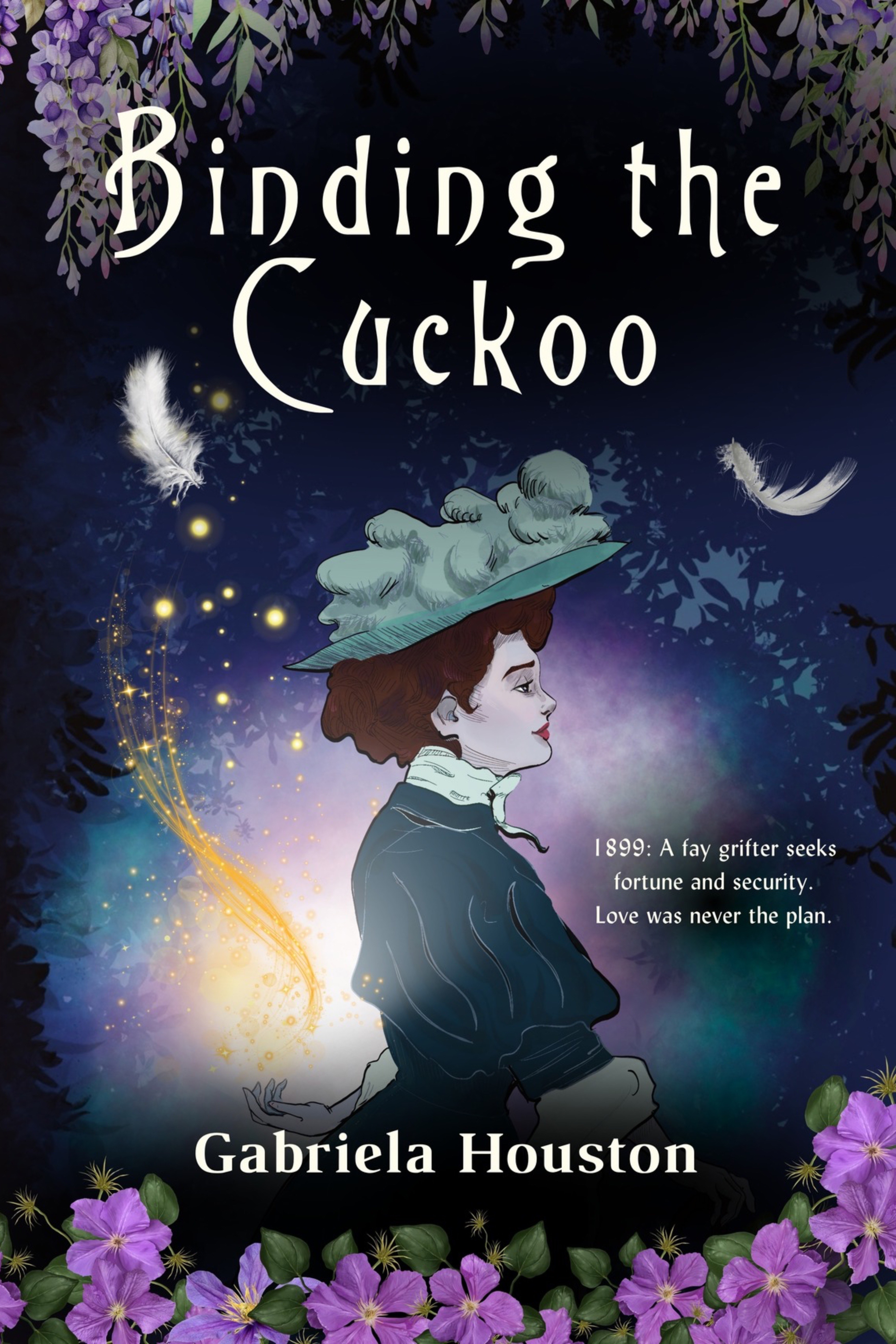
Dissecting my first draft: BINDING THE CUCKOO, by Gabriela Houston
I have recently published a new thing. A different thing. The first thing of mine that hasn’t given my friend R. nightmares.
My previous novels had a lot of love in them, true, but they were family stories. Stories of love for friends, for community. Romance was secondary in them.
And I assumed I’d keep writing this way.
But the idea for Binding the Cuckoo crept up on me. Slowly at first, then obsessively.
It began with a letter: a platitude-filled, smarmy, ingratiating disgrace to epistolary art. I giggled the whole way through writing it.
And then, I wrote the response.
And then came the story.
When setting out to write a historical novel, The Gilded Age was the obvious choice for a setting. My favourite era aesthetically, and one I was deeply interested in since uni, where I studied the early stirrings of the women’s rights movements.
Now for the main characters.
As an immigrant to England, I’m always interested in how people’s identities shift and change. How others’ perception might affect our own view of ourselves. How, no matter how long you’ve lived in a place, the label of “immigrant” sticks to you forever. Never fully accepted, but not quite the same as when you left your birthplace, either. Ever in-between, making a place for yourself.
But making my main characters Americans in Victorian London wasn’t enough. As a folklore lover, I wanted to imbue some of that magic into the fabric of the book. After all, who better to highlight the immigrant experience than creatures brought over from another world entirely?
The protagonist of Binding the Cuckoo is a ‘mythic’, a creature of folklore forcefully pulled into our world via the medium of a temporary portal between different planes. By being able to pass as a human, she can infiltrate — with the help of a retired school mistress’ contacts — London society, posing as an American socialite.
I enjoyed writing the culture clashes, and how the humans were so focused on the smaller culture clashes between nations — the way one ate, or dressed, or addressed the Duke — that they were completely oblivious to the fact that they had surrounded themselves with creatures imprisoned, diminished, yet still with thoughts, beliefs and values of their own.
Just as our Gilded Age was Eastward-looking in aesthetics, towards Japanese and Chinese art, so in Binding the Cuckoo, the human upper classes ‘borrowed’ from their bound mythics. They used their prisoners’ skills and powers to create a different kind of beauty for their clothes and homes. Almost a parody of the worlds their unwilling servants have been pulled from.
And in that world of misunderstanding and separation, I wanted to focus on building real connections. Not just between the main characters, but between the women, mythic or otherwise, who understood, or sought to understand, the injustices around them.
But of course, at its heart and its foundation, Binding the Cuckoo is a romance, and I never wanted to lose sight of that.
I knew I wanted to write the kind of romance that leaves the reader feeling happy and confident in the lasting nature of the main characters’ relationship. I believe in creating romantic relationships that are, at their core, healthy. Growing up in the 1990s, I feel like I’ve already consumed a lifetime’s worth of media glorifying toxic love affairs. I don’t want to contribute to that. I don’t want to read romance novels where the ‘happily ever after’ sees the heroine trapped in a prison of toxicity and insecurity.
I wanted to build a relationship that felt real, and was built on mutual respect as well as attraction.
Excitement and connection that feel real and attainable. The sweetness of chocolate, the comfort of tea and the excitement of a blood-soaked monster hunting you in the woods (sorry, old habits die hard) budding love affair.
Find out more about Binding the Cuckoo on Gabriela’s website.
More about Gabriela Houston
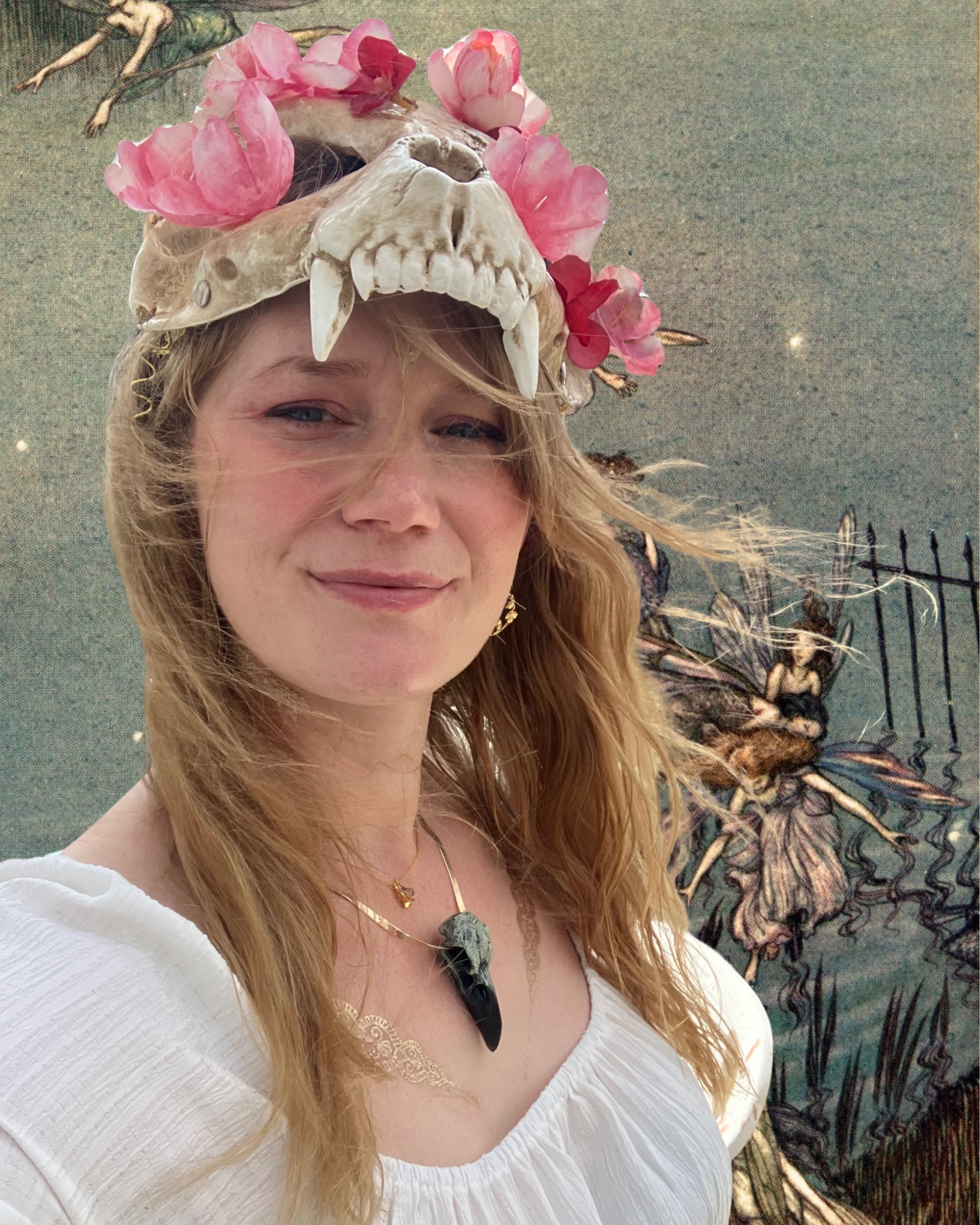
Gabriela Houston is a Polish artist and writer. She came to the UK at 19 to follow her passion for literature and completed her undergraduate and Masters degrees at Royal Holloway, University of London. She now lives with her family in Harrow, where she pursues her life-long passion for making stuff up.
She is the author of two Slavic-folklore-inspired novels for adults THE SECOND BELL and THE BONE ROOTS (both out from Angry Robot Books) and of a Slavic-Inspired upper MG duology (ages 9+), THE WIND CHILD, and THE STORM CHILD (Uclan Publishing).
Most recently she ran a successful Kickstarter campaign for a world-folklore-inspired anthology WHISPERS IN THE EARTH, which she edited, illustrated and contributed to alongside 19 other writers.
She’s the host of a YouTube channel, The Gabriela Houston Project: Storytelling in All its Forms, where she interviews writers, artists, researchers, scientists, historians and more about how they use storytelling in their lives and professions.
 Caroline Hardaker Author